
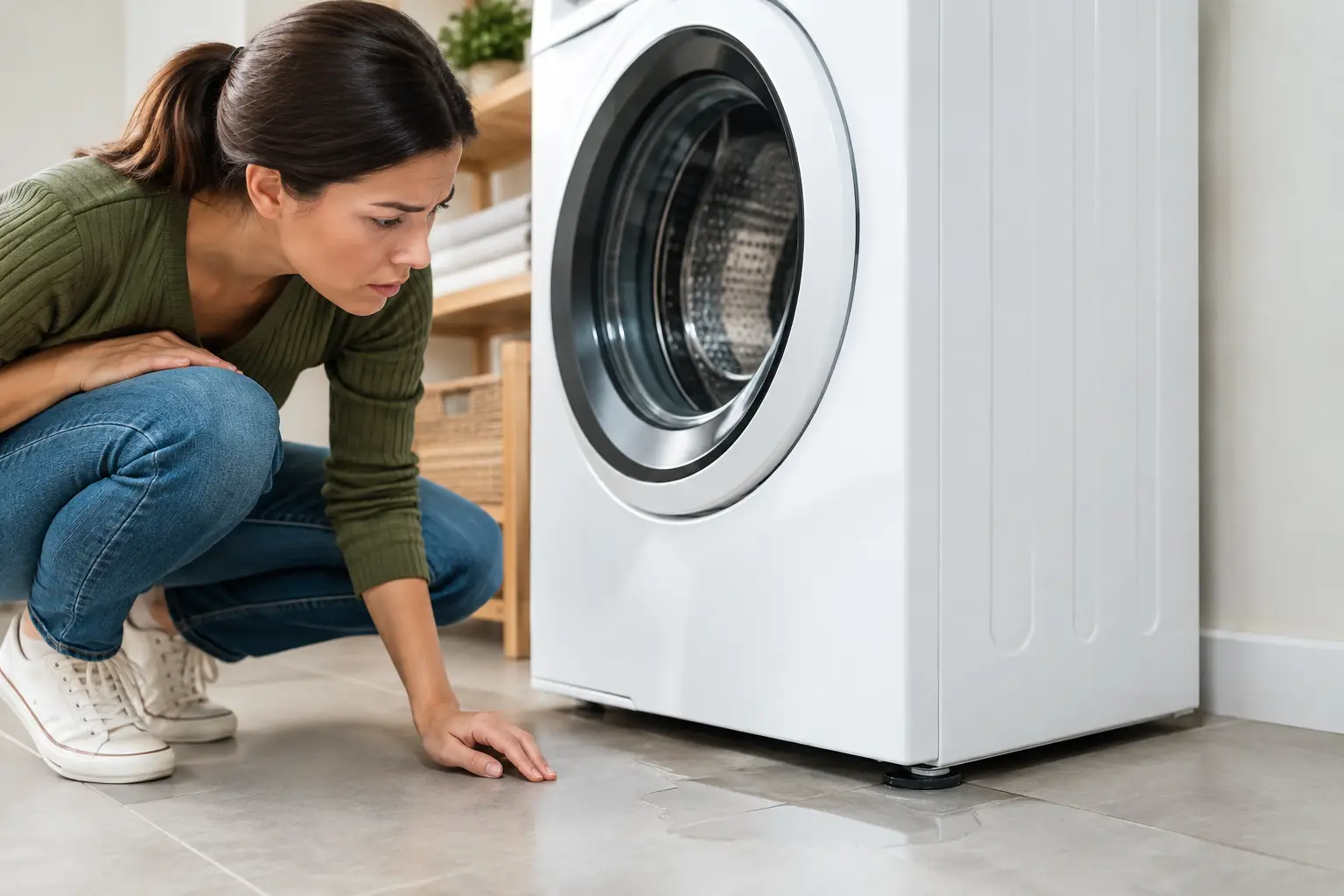
A small puddle beside the washing machine can turn into damaged flooring, mould growth, or a leak into the room below faster than most homeowners expect. Knowing how to identify washer leaks helps you act before a minor hose issue or worn seal becomes a larger repair. The key is to determine when the water appears, where it first collects, and whether the machine is safe to run again.
Before inspecting anything, turn off the washer and unplug it if water has reached the electrical cord, outlet, or control panel area. If the leak is significant, close the hot and cold water supply valves behind the machine. Mop up the water promptly, then use dry towels or paper towel to make it easier to see where fresh water returns.
How to identify washer leaks by timing and location
The point in the wash cycle when water appears offers one of the clearest clues. A washer that leaks while filling has a different likely cause than one that leaks only while draining or spinning. You do not need to take the appliance apart to make useful observations for a repair technician.
Pull the washer forward only if it can be done safely without straining hoses or damaging the floor. With the area dry, run a short cycle while staying nearby. Do not leave a leaking machine unattended. Watch the floor around the front, sides, and rear, and note the exact stage when water starts to appear.
Water appears before or during filling
Water at the rear of the washer during filling often points to the inlet hoses, hose connections, or water supply valves. Check for moisture around the threaded connections where the hot and cold hoses attach to the wall and the washer. A connection may need tightening, but avoid forcing it. Over-tightening can damage the fitting or washer inside.
Look along each hose for cracking, bulges, corrosion at the ends, or a fine spray of water. Even a slow drip can travel down the hose and pool somewhere that makes the true source difficult to see. Rubber hoses become less reliable with age, so visible wear is a good reason to arrange replacement rather than waiting for a burst.
If water seems to come from the detergent drawer on a front-load washer, the drawer may be clogged with detergent residue or filled beyond its marked level. Remove the drawer and rinse away buildup if your owner’s manual permits it. Using too much high-sudsing detergent can also force foam and water out through the dispenser area.
Water leaks during washing or agitation
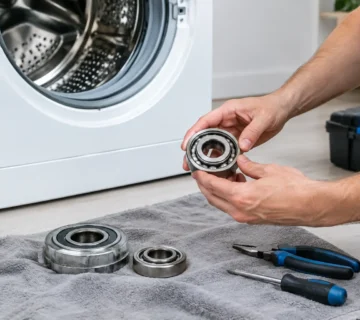
A leak from beneath the machine while the drum is moving can be harder to pinpoint. It may come from an internal tub hose, pump connection, door seal, or tub seal. These parts are generally not suitable for a do-it-yourself repair because access requires removing panels and working around electrical and mechanical components.
On a front-load washer, inspect the rubber door boot for tears, trapped clothing, hairpins, or buildup along the bottom folds. Wipe it clean and check that the door closes fully. A damaged boot can leak from the front of the machine, especially when the drum is full.
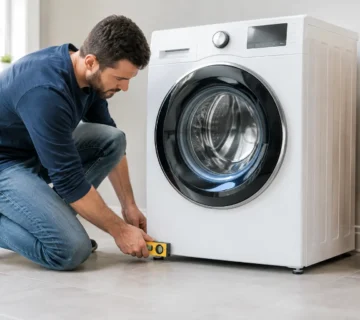
On a top-load washer, water splashing over the rim may mean the load is unbalanced, the washer is not level, or the machine is being overfilled. If the washer rocks when you press on opposite corners, adjust the levelling feet according to the manual. A level machine is less likely to vibrate excessively and push water where it does not belong.
Water appears while draining or spinning
A leak that starts as the washer empties commonly involves the drain hose, drain pipe, or drain pump. Check that the drain hose is firmly inserted into the standpipe and has not worked loose behind the machine. The hose should not be kinked, crushed, or pushed so far down the pipe that it creates drainage problems.
Water spilling from the standpipe rather than the washer itself can indicate a partially blocked household drain. This is especially likely if the water rises in the pipe during a spin cycle. Avoid repeatedly running the washer in the hope that the blockage clears. Each cycle can send more water onto the floor.
A failing drain pump may leave water under the front or centre of the washer during draining. You might also hear grinding, rattling, or an unusual humming sound. Small objects such as coins, clips, and screws can damage the pump or obstruct its filter. Some front-load models have an accessible pump filter, but follow the manufacturer’s instructions closely and expect residual water when opening it.
Rule out water that is not a washer leak
Not every wet laundry-room floor means the washer has failed. Condensation on cold water lines, a leaking utility sink, a nearby water heater, or water tracked in from outdoors can create confusion. Dry the area thoroughly and place paper towel beneath the washer connections, around the base, and near nearby plumbing. Fresh wet spots can help narrow down the source.
Also look at the type of water. Clear water that appears during filling is more likely connected to the supply hoses or dispenser. Soapy water generally points to the washer, door seal, detergent drawer, or a drainage issue. Grey water that appears during draining may come from the drain hose, pump, or standpipe.
If your machine is stacked with a dryer, check carefully before assuming the lower appliance is responsible. Water can run down the side of a stacked unit and collect at the base, hiding the actual source higher up.
Common causes you can check safely
A few simple checks can solve or clarify a washer leak without disassembling the appliance. Start with the external parts you can see, and stop if you find damage, active spraying water, or electrical risk.
- Loose or worn inlet hose connections can drip during the fill cycle.
- A cracked, kinked, or deteriorated supply hose can leak intermittently or spray under pressure.
- Excess detergent can create foam that escapes through the drawer, door, or vent areas.
- A damaged door gasket, loose drain hose, or blocked standpipe can release water during washing or draining.
Use only high-efficiency detergent in a high-efficiency washer and measure it carefully. More detergent does not make laundry cleaner, and it can create recurring overflow and residue problems. Similarly, avoid packing the drum too tightly. Overloading can affect balance, door sealing, and water movement inside the washer.
When to stop using the washing machine
Turn the washer off and arrange professional service if water is coming from beneath the cabinet, the control panel area, or an internal component you cannot safely access. Stop using it immediately if you smell burning, notice a damaged power cord, hear severe grinding, or see water near an outlet.
A machine that leaks only occasionally still deserves attention. Vibration can open a small crack further, and a weak hose can fail without warning. If the washer is installed on an upper floor, near finished flooring, or above a basement ceiling, prompt repair is particularly worthwhile because hidden water damage can be expensive.
Take a few photos of the wet area, the hose connections, and any visible damage before the area dries. Note the washer’s make and model, where the water appeared, and the cycle stage when it leaked. This information helps a technician diagnose the issue efficiently and arrive prepared with likely parts.
For homeowners and landlords in Kitchener, Waterloo, Cambridge, and surrounding communities, IAS Repair & Parts can assess washer leaks in your home, explain the cause clearly, and provide transparent repair options. A washer should make laundry easier, not leave you worrying about what is happening behind it. Acting when the first drip appears gives you the best chance of protecting both your appliance and your home.


No comment