

A washer that rattles the floor during spin cycle is not always facing a major breakdown. Often, the cause is as simple as an uneven load or an unlevel machine. This washer vibration diagnosis guide helps you separate those quick fixes from problems that need professional attention, so you can avoid damage to your appliance, flooring, and nearby connections.
Start by Identifying the Type of Movement
Not all washer movement means the same thing. A small amount of vibration during a fast spin cycle is normal, particularly with larger front-load models. The concern starts when the washer bangs repeatedly, shifts across the floor, shakes cabinets, or stops with an unbalanced-load error.
Listen and watch from a safe distance. A rhythmic thumping usually points to laundry gathered on one side of the drum. A hard metallic knock may suggest an internal component, suspension issue, or an installation problem. If the washer is actually walking forward, the feet, floor, or load balance are the most likely starting points.
Before inspecting anything, pause the cycle and unplug the washer. Turn off the water supply if you see leaking, damaged hoses, or movement severe enough to strain the connections.
Check the Load Before Assuming a Repair Is Needed
An uneven load is the most common reason for sudden vibration. Heavy, absorbent items can hold a surprising amount of water and collect into one dense mass during the spin cycle. Think bath mats, comforters, sleeping bags, hoodies, towels, and a single pair of heavy shoes.
Open the door or lid once the machine has stopped completely. Spread the items evenly around the drum and remove a few pieces if it is packed tightly. A washer needs room for clothing to shift and redistribute. On the other hand, washing one very heavy item alone can also cause trouble because there is not enough lighter laundry to balance it.
Try the spin cycle again. If the vibration disappears, the washer itself is likely fine. For bulky items, use the cycle recommended in the owner’s manual and consider adding a few similar-weight towels to help distribute the load. Do not overload the drum just to make a single trip to the laundry room.
Front-Load and Top-Load Washers Can Behave Differently
Front-load washers spin at high speeds, so even a minor imbalance can feel dramatic. They are also more likely to vibrate if they are not precisely level from side to side and front to back.
Top-load washers may pause and attempt to redistribute the load automatically. If that process fails, they can bang against the cabinet or stop before the final spin. Repeatedly forcing a machine through a violent spin cycle is not a solution. It can wear out suspension parts and damage the tub over time.
Make Sure the Washer Is Level and Stable
A washer should sit firmly on all four feet. If one foot does not fully contact the floor, the cabinet can rock and amplify normal spin-cycle movement.
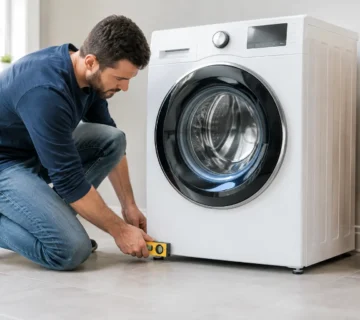
With the washer empty and unplugged, press down gently on each corner. It should not wobble. If it does, adjust the levelling feet according to the appliance manual, then tighten the locking nuts if your model has them. A small bubble level placed across the top of the washer can help, but stable contact with the floor matters just as much as a perfectly centred bubble.
Avoid using cardboard, folded towels, wood scraps, or other makeshift shims under a washer. They compress, slip, and hold moisture. Purpose-made anti-vibration pads can reduce noise on some flooring, but they will not correct an unlevel appliance or failed internal parts.
The floor itself also matters. A solid concrete floor usually handles spin vibration well. Older wood floors can flex, especially when a heavy washer is installed away from a supporting wall or over a weak section of subfloor. If the floor visibly moves while the washer spins, levelling the appliance may reduce the problem but may not eliminate it.
Rule Out Installation Issues
A newly installed washer that shakes violently deserves an installation check before anything else. Some front-load machines are shipped with transit bolts at the rear. These bolts secure the drum during transportation and must be removed before the washer is operated. If they remain in place, the machine can shake intensely and internal damage may result.
Check the back of the washer for the transit-bolt locations shown in the installation instructions. Do not guess or remove unrelated screws. If you are unsure whether the bolts were removed, arrange an inspection rather than running another cycle.
Also look at the drain hose and water hoses. They should have enough slack that washer movement does not pull, kink, or rub them against the wall. The appliance should not be pressed tightly against cabinets, a dryer, or a baseboard. Contact with a wall can turn ordinary vibration into loud knocking.
Signs the Problem May Be Inside the Washer
If the washer is level, correctly installed, and still shakes when running balanced loads, an internal repair may be needed. The suspension system is designed to control the tub during agitation and high-speed spin. Depending on the model, it may use shock absorbers, suspension rods, springs, or dampers.
Worn suspension parts allow the tub to swing too freely. You may notice a loud bang during spin, repeated out-of-balance errors, or a drum that drops or rebounds excessively when pressed gently by hand with the machine off. These parts can often be replaced, but the correct diagnosis matters because similar symptoms can come from other faults.
A damaged tub bearing is another possibility, particularly if vibration comes with a deep roaring, grinding, or rumbling noise that gets louder as spin speed increases. Bearings can be a more involved repair. The value of repairing them depends on the washer’s age, condition, model, and the cost of the required parts and labour.
Loose counterweights, damaged drive components, or a worn motor mounting can also create sharp banging or heavy vibration. These are not good DIY repairs for most households. Washers are heavy, and internal components may be difficult to access safely without the proper tools and service information.
When to Stop Using the Washer
Turn the appliance off and avoid further use if it moves more than a few centimetres during spin, makes a grinding or metal-on-metal sound, leaks, smells like burning, or trips a breaker. Continuing to run it can damage the drum, door seal, hoses, flooring, or electrical components.
The same applies if the washer is repeatedly striking a wall or pulling on its water lines. A small issue can quickly become a plumbing problem when a hose fitting is strained or a drain connection loosens.
If you rent, report severe movement to your landlord or property manager promptly. Do not attempt to move a stacked washer and dryer unit or uninstall a gas dryer yourself to access the washer. These setups need careful handling to prevent injury and connection damage.
A Practical Washer Vibration Diagnosis Guide for Service Calls
When you book a repair, a few details can help the technician diagnose the issue faster. Note whether the vibration happens during wash, drain, or spin, whether it occurs with every load, and whether any error code appears. A short video of the sound and movement can also be useful, provided you record it from a safe distance and never stand close to a moving machine.
Be ready to mention the washer’s brand, approximate age, and whether it was recently delivered, moved, or installed. A machine that began vibrating immediately after installation needs a different inspection than one that gradually became louder over several months.
For homeowners in Kitchener, Waterloo, Cambridge, and surrounding communities, IAS Repair & Parts can assess the appliance in your home, explain the cause clearly, and provide transparent repair options before work begins. In many cases, a properly equipped technician can complete common washer repairs on the first visit.
A washer should make laundry easier, not leave you waiting beside it in case it shakes apart. Start with load balance and levelling, but trust the warning signs. Prompt attention to persistent vibration protects both the appliance and the room around it.



No comment