
A washing machine that suddenly sounds like a jet taking off during the spin cycle is not just inconvenient. It can be a warning that the drum bearings are wearing out. Washer bearing replacement is a major repair, but it can restore a quality machine when the rest of the appliance is in good condition.
The right decision depends on more than the noise. The washer’s age, the condition of the drum and tub, the availability of parts, and the cost of repair all matter. A clear diagnosis helps you avoid paying for a repair that will not last – or replacing a machine that still has years of reliable service ahead.
What washer bearings do
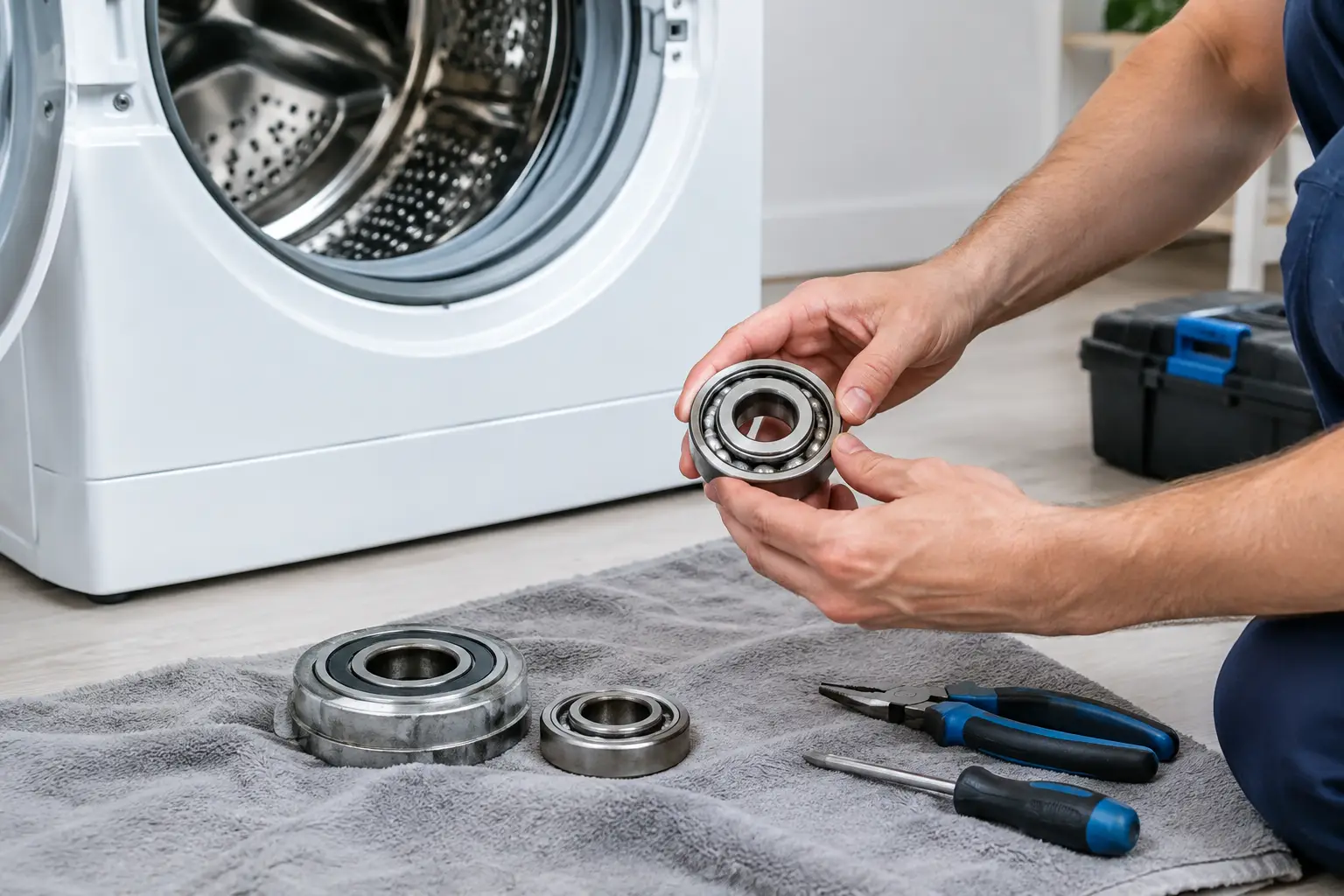
Bearings sit behind the washer drum and allow it to turn smoothly, especially at high speed during the spin cycle. They support a heavy load made even heavier by water-soaked clothing. A seal protects the bearings from moisture, but once that seal fails, water can enter and cause corrosion.
As the bearings wear down, the drum can become loose or rough when it turns. The machine may still wash clothes for a while, but continued use can place added stress on the shaft, tub, suspension, motor components, and belt or drive system. What begins as an unpleasant rumble can become a more expensive repair if it is ignored.
Front-load washers commonly develop bearing problems because their drums spin at high speeds and the bearing assembly carries substantial weight. Top-load models can also have similar issues, although a loud spin cycle in a top-loader may be related to a different component.
Signs you may need washer bearing replacement
The most common sign is a deep roaring, grinding, or rumbling sound that becomes louder during the spin cycle. It is often noticeably different from the normal hum of a washer. The noise may start mildly and worsen over several weeks or months.
You may also notice that the drum has excess movement. With the washer turned off and empty, open the door and gently lift the inner drum from the top edge. A small amount of movement can be normal, but a clear clunk, wobble, or gap between the drum and the rubber door seal deserves professional attention.
Other warning signs include water leaking from the rear of the tub area, rusty marks beneath the machine, clothes coming out unusually wet, or a washer that shakes and bangs despite being level. In severe cases, the drum may rub against the door seal or outer tub.
These symptoms do not automatically confirm failed bearings. Loose objects caught in the drum, a worn drive belt, damaged shock absorbers, a failing pulley, or a cracked drum spider can produce similar sounds. That is why a proper inspection is worth arranging before ordering parts or making a replacement decision.
A quick check homeowners can do safely
Start by running an empty spin cycle and listening for where the sound is strongest. A bearing issue usually creates a low, continuous roar that increases with drum speed. Do not place hands inside the machine while it is operating or try to hold the drum in place.
Then turn off the power, unplug the washer, and slowly rotate the empty drum by hand. Grinding, rough spots, or a rumbling feel may point to a bearing problem. This check is useful information for a technician, but it is not a complete diagnosis.
Why this repair is more involved than it looks
Washer bearing replacement usually requires extensive disassembly. On many machines, the washer must be disconnected, opened, and stripped down to reach the outer tub. The drum has to be removed, the old bearings and seal pressed out, and new parts installed precisely before the washer is reassembled and tested.
The work can involve counterweights, wiring connections, springs, hoses, the motor, and the full tub assembly. The drum shaft must also be inspected carefully. If a failed bearing has damaged or corroded the shaft, simply installing new bearings may not provide a lasting repair.
Some manufacturers sell the bearings and seal as individual service parts. Others supply a complete rear tub or outer tub assembly instead. That difference can change the cost and practicality of the repair significantly. On certain models, the outer tub is sealed or not designed to be separated, making the job more labour-intensive or making a full tub replacement the manufacturer-supported option.
For these reasons, this is rarely a practical first DIY repair. An incorrect installation, damaged seal, or poorly seated bearing can lead to leaks and another breakdown. A trained appliance technician can identify the actual source of the noise, check for related damage, and provide an honest repair assessment before work begins.
Repair or replace: how to make the call
There is no single age at which every washer should be replaced. A well-built machine that is otherwise in good condition may be worth repairing, particularly if it is relatively new and the needed parts are available. Washer bearing replacement can make sense when the controls, motor, tub, door seal, and suspension system are all sound.
Replacement may be the better value when the machine is older and has several developing problems. For example, a washer with worn bearings, recurring drain errors, a leaking door boot, corrosion, and a damaged drum spider may require too many major parts at once. A cracked outer tub or severely damaged shaft can also shift the decision toward replacement.
Consider the practical side as well. If your household depends on the washer daily, repair timing matters. A technician with common parts and diagnostic equipment in the service vehicle may be able to reduce delays, but some bearing or tub components must be ordered for the specific model. Ask about part availability, the expected repair timeline, and warranty coverage for both parts and labour.
The best choice is one you can make with the full picture: a confirmed diagnosis, transparent pricing, and an explanation of what the repair will and will not address.
How to protect new washer bearings
Bearings eventually wear, but good laundry habits can help prevent unnecessary strain. Do not overload the drum, even if the washer seems able to fit more clothing. Heavy items such as towels, blankets, and bedding should be distributed as evenly as possible so the drum does not repeatedly spin out of balance.
Use the recommended amount of high-efficiency detergent if your washer requires it. Excess suds can contribute to residue and moisture issues around seals. After washing, leave the door or lid open for a short time to allow the interior to dry, especially with front-load machines.
Pay attention to new sounds early. A minor noise is easier to investigate than a bearing failure that has progressed far enough to damage the drum shaft or tub. If the machine is vibrating heavily, stop the cycle when safe to do so, check that it is level, and avoid continuing to run repeated high-speed loads until the cause is known.
What to expect from a professional diagnosis
A proper service visit should begin with questions about the noise, leaks, vibration, and when the issue occurs. The technician will inspect the drum movement, test the washer’s operation where appropriate, and rule out other common causes such as a foreign object, suspension issue, pulley problem, or drain fault.
If bearings are the cause, you should receive a clear explanation of the repair options. That includes whether individual bearings can be replaced, whether a larger tub assembly is required, and whether other damage affects the long-term value of the work. At IAS Repair & Parts, the goal is to give homeowners a straightforward recommendation and transparent pricing before proceeding.
A loud washer does not always mean the appliance is finished. Addressing the problem promptly gives you more options, protects the rest of the machine, and helps bring laundry day back to normal with less disruption.


No comment