A burner that will not heat can turn an ordinary weeknight dinner into a frustrating scramble. Common cooktop burner problems range from a loose electric element to a gas ignition fault, and the right next step depends on the type of cooktop and the symptoms you notice. A few basic checks may restore operation, but heat, electricity, and gas are not areas for trial-and-error repairs.
Common Cooktop Burner Problems Homeowners See
A burner will not heat at all
On an electric coil cooktop, a burner that stays cold may simply be sitting improperly in its receptacle. Once the cooktop has cooled and power is off, the element can be removed and carefully re-seated. Look for visible scorching, bent terminals, or a loose connection where the element plugs in.
If re-seating does not help, the element, burner receptacle, switch, wiring, or electronic control may have failed. On a smooth-top electric or induction cooktop, the issue may involve the heating element below the glass, a sensor, or the control board. These components require proper testing before replacement. Replacing a part based on a guess can add cost without solving the problem.
For a gas cooktop, no heat may mean no gas is reaching that burner, the burner cap is out of position, or the igniter is not sparking as it should. If you smell gas, do not try to relight the burner. Turn off the appliance if it is safe to do so, avoid switches or open flames, leave the area, and contact your gas utility or a qualified gas appliance professional.
A burner heats unevenly or too slowly
A pan that takes far longer than usual to boil water may point to an element that is weakening, a damaged surface burner, or a control issue. For coil burners, a warped or damaged element can create uneven heat. For radiant glass cooktops, the affected zone may cycle unusually or fail to reach the selected temperature.
Before assuming the cooktop needs repair, check the cookware. A flat-bottomed pan that matches the burner size transfers heat more efficiently. On induction models, cookware must also be magnetic and compatible with induction cooking. A small pan on a large burner, or a warped pan on a smooth glass surface, can make a working burner seem faulty.
Gas burners often heat unevenly when food residue blocks the small ports around the burner head. After the unit is fully cool, remove the grate and burner cap and clean away grease or spills according to the manufacturer’s instructions. Do not enlarge burner ports with pins, wires, or drills. That can damage the burner and alter the flame pattern.
The gas burner clicks continuously
A clicking sound is normal while a gas burner is being lit. It should stop once a stable flame appears. Continuous clicking after ignition usually means moisture, grease, or debris is interfering with the igniter, burner cap, or ignition switch.
Start by turning all burner controls off. Let the cooktop cool, then dry and clean the burner area carefully. A burner cap that is not seated correctly can prevent reliable ignition, so place it back in its proper position. Spills from boiling pots are a frequent cause, and the clicking may continue until the area is completely dry.
If the clicking returns repeatedly, happens when every burner is off, or occurs after the cooktop has dried, professional diagnosis is the safer choice. An ignition switch or spark module may be failing. Leaving the cooktop powered while it clicks continuously can wear out ignition components and create more inconvenience later.
The flame is weak, yellow, or uneven
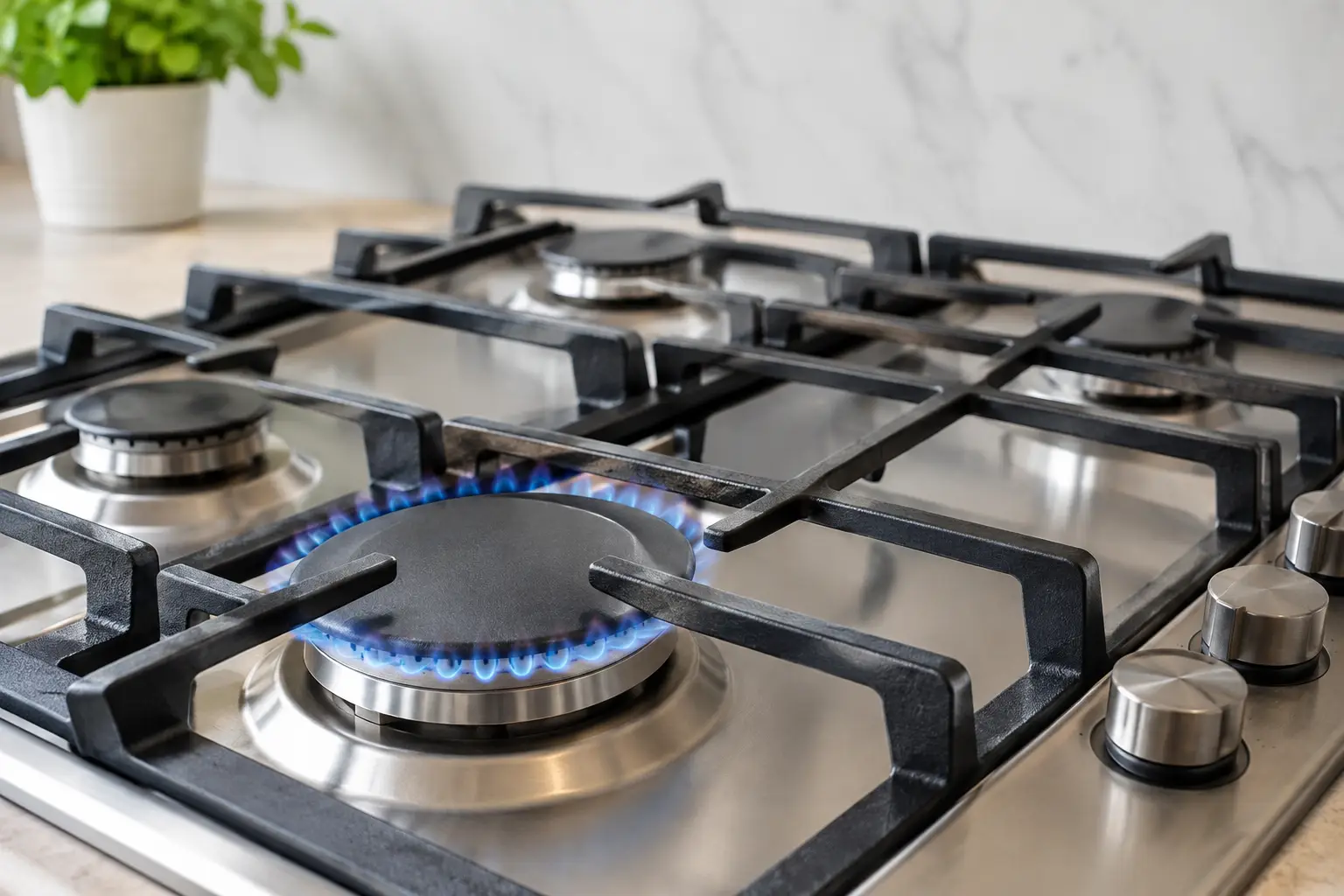
A healthy natural gas flame is usually mostly blue, with a steady, even ring around the burner. A few brief yellow tips can occur, but a persistent yellow, lazy, or uneven flame deserves attention. It can result from clogged burner ports, a misaligned cap, a burner head issue, or a problem with the gas supply or air-to-gas mixture.
First, make sure the cap is clean, dry, and seated level. If the flame remains abnormal after basic cleaning, stop using that burner until it is inspected. Poor combustion can leave soot on cookware and may indicate a condition that should not be ignored.
The burner is stuck on high or will not adjust
A burner that only produces high heat can quickly scorch cookware and create a safety concern. With older electric cooktops, a failed infinite switch is often responsible. On newer models, an electronic control, relay, or sensor may be the cause.
Turn the control off and avoid using the affected burner. If it continues heating after being switched off, disconnect power at the breaker only if you can do so safely, then arrange service promptly. Do not rely on moving the pot or covering the burner as a workaround. The appliance needs a proper diagnosis before it is used again.
The cooktop trips a breaker or shows an error code
A tripped breaker may occur after a power surge, but repeated trips are not normal. A shorted element, damaged wiring, moisture inside the appliance, or a failing control component could be involved. Resetting the breaker once may be reasonable if there are no signs of damage, but do not keep resetting it if it trips again.
Induction and glass cooktops may display an error code, flash a light, or shut down a cooking zone. Record the code and note what happened before it appeared. Was the cooktop recently cleaned? Did it occur on one zone or all of them? Was compatible cookware in use? These details help a technician identify the issue efficiently.
Safe Checks Before You Book Cooktop Burner Repair
There are a few low-risk checks that can clarify the problem. Make sure controls are off and surfaces are cool before touching any part of the cooktop. Confirm the appliance has power, inspect for a tripped breaker, and check that an electric coil is fully seated. For gas models, verify that burner caps are positioned correctly and that the burner area is clean and dry.
It also helps to test the symptom carefully. If one burner is affected while the others work normally, the fault may be limited to that burner assembly or its controls. If every burner has stopped working, the problem may be related to the appliance power supply, gas supply, or central control system. This is useful information, but it is not a reason to dismantle the cooktop yourself.
Avoid removing wiring, lifting a glass cooktop, bypassing a switch, or attempting to adjust gas components. Electrical connections beneath the surface can retain hazards, and gas appliances should be serviced by qualified professionals. A repair that begins as a small inconvenience can become more expensive if parts are damaged during a DIY attempt.
When a Professional Repair Is the Better Option
Call for service when a burner will not heat after basic checks, repeatedly trips the breaker, heats without responding to its control, or shows visible damage. For gas cooktops, arrange prompt help for persistent ignition problems, unusual flames, a burner that will not light, or any gas odour.
Repair is often worthwhile when the issue is isolated to an element, igniter, switch, receptacle, sensor, or control component. The best decision depends on the cooktop’s age, condition, available parts, and the cost of repair compared with replacement. An honest assessment should explain what has failed, what the repair involves, and the expected cost before work begins.
For households in Kitchener, Waterloo, Cambridge, and nearby communities, IAS Repair & Parts can diagnose cooktop burner concerns in your home and help you make a clear, practical decision. The goal is not simply to get a burner working again, but to restore a safe, dependable cooking surface with the least disruption to your routine.
A cooktop does not need to fail completely before it deserves attention. A burner that clicks, heats unevenly, or behaves unpredictably is giving you an early warning – and addressing it promptly can keep dinner plans, household routines, and safety on track.


No comment