
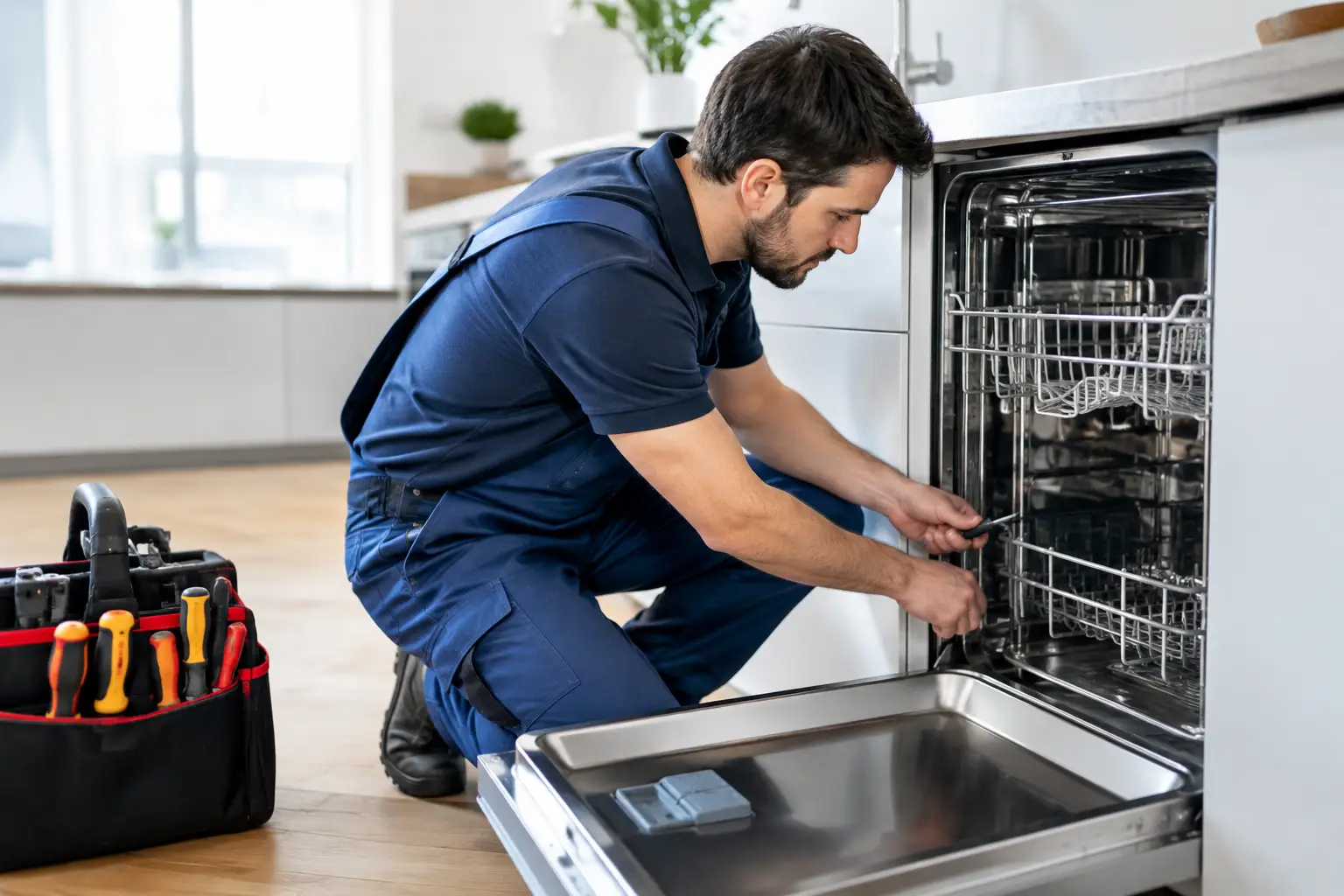
A dishwasher that quits halfway through a cycle can disrupt far more than dinner cleanup. Standing water, cloudy dishes, a puddle under the door, or a burning smell all point to a problem that deserves attention before it becomes a larger repair. Prompt dishwasher repair helps protect your kitchen, restore your routine, and avoid the frustration of washing every dish by hand.
Some issues have a simple cause, such as a blocked filter or a door that is not fully latched. Others involve electrical components, water supply parts, pumps, or heating systems that need a qualified technician. Knowing the difference can save time, prevent water damage, and help you make a sensible decision about repair versus replacement.
Signs Your Dishwasher Needs Repair
Dishwashers tend to give warning signs before they stop working completely. The most obvious is water left at the bottom after a cycle. A small amount of clean water around the filter area can be normal, but a pool of dirty water usually means the machine is not draining as it should. A clogged filter, blocked drain hose, faulty drain pump, or problem with the household plumbing connection may be responsible.
Poor cleaning is another common concern. If dishes come out greasy, gritty, or covered in white residue, start with the basics: use fresh detergent, avoid blocking the spray arms, and make sure the filter is clean. If the problem continues, the dishwasher may have a worn circulation pump, damaged spray arm, dispenser issue, or failing heating component.
Leaks should never be ignored. Water may appear at the front of the appliance because of a worn door gasket, an overloaded rack, or a damaged door latch. Leaks underneath or behind the dishwasher can be caused by a loose hose, pump seal, inlet valve, or internal crack. Even a slow leak can damage flooring, cabinetry, and subflooring over time.
Unusual noises also deserve a closer look. A light swishing sound is expected during operation, but loud grinding, repeated knocking, buzzing, or a high-pitched squeal is not. The sound can come from a failing pump, foreign object in the pump area, worn motor components, or a spray arm striking a dish. If a noise is new or gets worse from one cycle to the next, stop running the appliance until it has been assessed.
When Dishwasher Repair Is a Safety Issue
Some dishwasher problems call for more than a wait-and-see approach. Turn off the dishwasher and arrange service if you notice a burning smell, smoke, sparks, repeated tripped breakers, or signs of overheating. Do not continue resetting a breaker to finish a cycle. Electrical faults need proper diagnosis, especially because dishwashers operate close to water lines and cabinets that can hide damage.
A major leak is another reason to act quickly. Shut off the dishwasher’s water supply if you can safely access the valve, then avoid using the machine. If water has reached electrical outlets, the power connection, or nearby appliances, do not touch those areas. A professional can identify the source of the leak and check for damage that may not be visible from the front of the unit.
You should also pause use when the dishwasher will not latch or its door drops heavily. A dishwasher door supports racks full of dishes and contains water throughout the cycle. A faulty latch, hinge, or spring can lead to leaks, interrupted cycles, and further damage if forced.
A Few Checks You Can Safely Make First
Before booking a visit, there are a few practical checks that may resolve a minor issue. Confirm the dishwasher has power and that its breaker has not tripped. Check that the door is closing firmly and that the control lock has not been activated. If the dishwasher is not draining, remove and rinse the filter according to the manufacturer’s instructions, then check for food debris around the filter opening.
For cleaning problems, inspect the spray arms for blocked holes and make sure large pans or utensils are not preventing them from turning. Run the hot water at the kitchen sink for a moment before starting a cycle, particularly if your dishwasher is connected to the same hot-water line. This can help the machine begin with warmer water.
Do not dismantle electrical panels, disconnect hoses, bypass safety switches, or use harsh drain cleaners inside the dishwasher. These steps can create a safety risk and may damage seals, hoses, and internal parts. If the same issue returns after basic cleaning and checks, the appliance needs a more complete diagnosis.
What a Professional Dishwasher Repair Visit Can Solve
A proper service visit begins with more than reading an error code. Error codes are useful clues, but the same code can be triggered by several different faults. A technician should inspect the appliance’s operation, water supply, drainage, electrical connections, and key components before recommending a repair.
Many dishwasher failures involve parts that are difficult to assess without the right tools. These include circulation and drain pumps, water inlet valves, float switches, heating elements, thermostats, control boards, door latches, and wiring connections. An experienced technician can test the relevant components and explain what has failed, what the repair involves, and what it will cost before work moves ahead.
For households in Kitchener, Waterloo, Cambridge, and surrounding communities, fast in-home service matters because a dishwasher is built into the kitchen and rarely practical to transport. IAS Repair & Parts sends equipped technicians to diagnose common issues on site and complete many repairs during the first visit when the required part is available. Clear pricing and warranties on parts and labour help take the guesswork out of an unexpected appliance problem.
Repair or Replace: How to Make the Call
The right choice depends on the dishwasher’s age, condition, repair cost, and how well it has performed until now. A machine with a single failed component may be well worth repairing, particularly if it has been reliable, fits your cabinetry properly, and has no history of recurring leaks or control problems.
Replacement may make more sense when an older dishwasher needs several expensive parts, has serious corrosion, leaks from a damaged tub, or has experienced repeated breakdowns. Parts availability also matters. If a model has been discontinued and compatible parts are no longer available, putting more money into a temporary fix may not be the best value.
Energy and water use can factor into the decision, but they should not be the only consideration. A new dishwasher has an upfront purchase and installation cost, and installation may require adjustments to plumbing, electrical connections, or cabinetry. An honest assessment should weigh the full picture rather than pushing a replacement when a dependable repair is still possible.
Preventing the Next Dishwasher Problem
No appliance is maintenance-free, but a few habits can reduce avoidable dishwasher issues. Scrape large food particles into the garbage or compost before loading dishes. There is no need to pre-wash everything, yet bones, labels, fruit pits, and excessive grease can block filters and affect drainage.
Clean the filter regularly, especially in a busy household. Check the spray arms occasionally and remove debris from their holes if needed. Use detergent designed for automatic dishwashers, and use rinse aid if your dishes are coming out spotted or not drying well. In areas with hard water, mineral buildup can affect cleaning performance, so follow the appliance manufacturer’s care guidance.
Take a moment to load dishes without blocking the dispenser or spray arms. Overcrowding can make a working dishwasher look faulty because water cannot reach every surface. Finally, deal with a small leak, strange noise, or intermittent error early. Repairs are often simpler before a worn part damages another component.
A dishwasher should make daily life easier, not add another task to an already busy week. If your machine is leaking, leaving dishes dirty, refusing to drain, or showing signs of an electrical fault, arrange a professional assessment before the problem grows. The right repair can bring back a clean, reliable kitchen routine with far less disruption than you expect.




No comment