
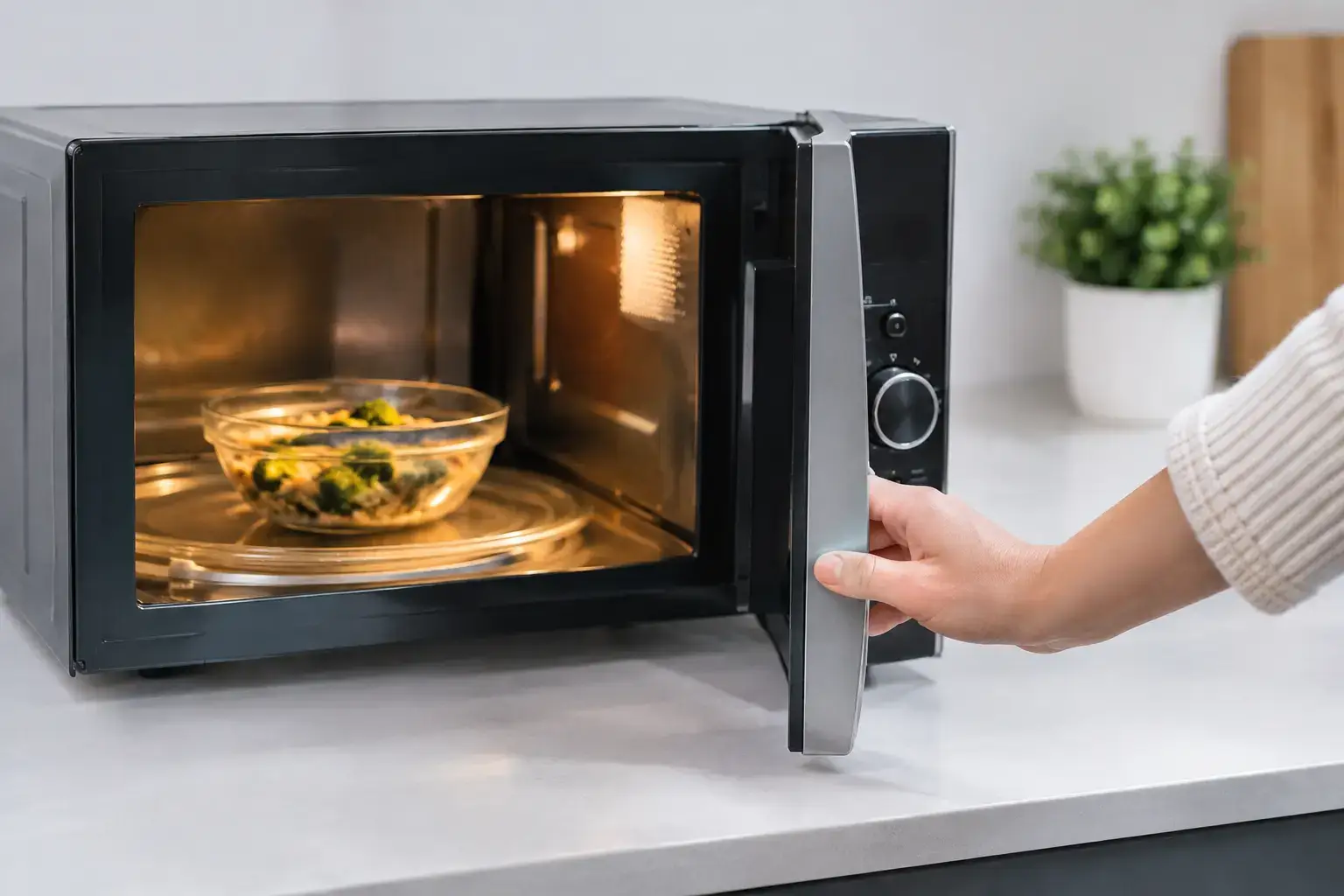
A spark inside the microwave can turn a routine lunch into a stressful moment. The safest way to prevent microwave sparking safely is to stop the cycle immediately, keep the door closed until the sparking stops, and find the cause before using the appliance again. A brief flash is not something to ignore, even if the microwave seems to work normally afterward.
Microwaves contain high-voltage electrical components that can remain dangerous even after the unit is unplugged. That means homeowners should focus on safe checks they can see and clean, then leave internal repairs to a qualified appliance technician.
What to Do When Your Microwave Starts Sparking
Press Stop or Cancel right away. If the microwave continues to spark, turn it off and unplug it once it is safe to do so. Do not open the door while there is active flame or heavy smoke. Keep the door shut to limit oxygen, and use a household fire extinguisher only if a fire continues after the microwave has been unplugged.
After the unit has cooled, remove the food and any dishes. Look for obvious signs of scorching, melted plastic, burnt food, or metal that may have been left inside. Do not run another test cycle just to see whether the problem repeats. Repeated arcing can damage the interior coating, the waveguide cover, or other components that are not designed for homeowner repair.
If you notice a burning smell that remains after cleaning, a damaged door, smoke from the control panel, or sparks with an empty microwave, leave it unplugged. These are good reasons to arrange a professional diagnosis.
The Most Common Reasons Microwaves Spark
Sparking, also called arcing, occurs when electricity jumps between surfaces inside the oven cavity. Sometimes the cause is simple. Other times, it points to wear or damage that needs attention.
Metal and metallic trim
Forks, twist ties, foil, travel mugs, and dishes with metallic paint are common culprits. Even a small piece of foil can create a dramatic spark if it is crumpled, too close to the microwave wall, or touching another metal surface.
Not every metal item behaves the same way. Some microwave-safe packaged foods include a specially designed browning sleeve or tray. These should only be used exactly as directed by the food manufacturer. When in doubt, use microwave-safe glass, ceramic, or clearly marked microwave-safe plastic.
Food residue and burnt splatters
Grease, sauce, or food particles baked onto the ceiling or side walls can carbonize. Once that residue becomes charred, it may create a path for arcing during future heating cycles. This is especially common after uncovered foods have splattered repeatedly near the side wall.
A gentle cleaning with warm water and mild dish soap can solve this issue. Use a soft cloth or sponge, not steel wool, abrasive powder, or harsh scraping tools. Those products can scratch the protective interior surface and create a bigger problem.
A damaged waveguide cover
Many countertop and over-the-range microwaves have a small rectangular panel inside the cooking cavity, often on a side wall. This is the waveguide cover, commonly made from mica. It helps protect the opening where microwave energy enters the oven cavity.
If the cover is greasy, burnt, cracked, warped, or has a dark scorched spot, it can spark. Light surface grime may be cleaned carefully when the microwave is unplugged and cool. However, a burned or damaged cover should be assessed and replaced properly. Do not operate the microwave with the cover removed or attempt to substitute it with cardboard, foil, or another household material.
Chipped interior paint or damaged cavity walls
The coated interior of a microwave is more than cosmetic. If paint has chipped down to exposed metal, moisture and food residue can lead to rust and arcing. Small surface marks may not always require immediate replacement, but active rust, peeling coating, deep chips, or recurring sparks need a technician’s assessment.
The practical decision depends on the microwave’s age, condition, and the location of the damage. A repair may be worthwhile for a newer built-in or over-the-range unit. For an older countertop microwave with extensive cavity damage, replacement can be the safer and more cost-effective option.
A faulty rack, turntable, or internal component
Some microwaves are supplied with a metal rack designed specifically for that model. If it is installed incorrectly, damaged, or used during a mode that does not permit it, sparking can occur. Check the owner’s manual before using any rack.
Sparking can also come from a failing stirrer, diode, magnetron, wiring connection, or other internal part. These faults are not visible from the cooking cavity and should never be investigated by removing the microwave cabinet. The risk of serious electrical shock is too high.
How to Prevent Microwave Sparking Safely at Home
Prevention is mostly about using the right containers, keeping the cavity clean, and responding early to signs of wear. Before heating food, check for forgotten cutlery, foil seals, bread-bag ties, or containers with metallic decoration. Take-out containers can be misleading too. A paper-looking container may have a foil lining or metal handle.
Cover foods that tend to splatter, particularly sauces, bacon, and foods with high fat content. A microwave-safe cover helps keep residue off the walls and ceiling while allowing steam to escape. Wipe up spills promptly after the microwave cools, rather than waiting until they harden.
Give the interior a quick inspection every few weeks. Look at the door seal, turntable, roller ring, cavity walls, and waveguide cover. If the turntable does not rotate smoothly, clean beneath it and make sure the roller ring is seated correctly. Food that sits too close to one area of the cavity can overheat and burn.
Avoid running a microwave empty unless the manufacturer specifically instructs otherwise. Without food or liquid to absorb energy, the appliance can overheat and put unnecessary stress on internal components.
When Cleaning Is Enough and When It Is Time for Repair
A one-time spark caused by a fork or foil item does not automatically mean the microwave is damaged. Once you have removed the item and checked for scorch marks, the appliance may be fine. Still, inspect it carefully before putting it back into regular use.
Cleaning is a reasonable first step when you can clearly see food debris or grease and there is no damage to the microwave’s interior surface, waveguide cover, door, or turntable. Use only non-abrasive cleaning methods and let the cavity dry completely.
Book service when arcing happens without metal inside, returns after cleaning, or leaves burn marks. You should also call for help if the microwave trips a breaker, makes an unusual buzzing sound, stops heating, has a damaged door latch, or displays an error code. These symptoms can indicate a problem that should not be managed with trial and error.
For homeowners in Kitchener, Waterloo, Cambridge, and nearby communities, IAS Repair & Parts can provide an honest assessment of whether a microwave repair makes sense or whether replacement is the better choice. A qualified technician can inspect the appliance safely, explain the issue clearly, and provide transparent pricing before repair work begins.
A Quick Safety Check Before Using It Again
Before returning a microwave to service after a minor incident, make sure the cavity is clean and dry, the turntable and roller ring are correctly positioned, and there are no visible scorch marks, chipped coating, or damaged panels. Use a microwave-safe cup of water for a short supervised test only if the cause was clearly identified as a removable metal item and the microwave shows no damage.
If you see another spark, stop immediately and unplug the unit. A microwave is an everyday appliance, but sparking is its way of telling you something needs attention. Acting early protects your kitchen, your appliance, and your peace of mind.


No comment