
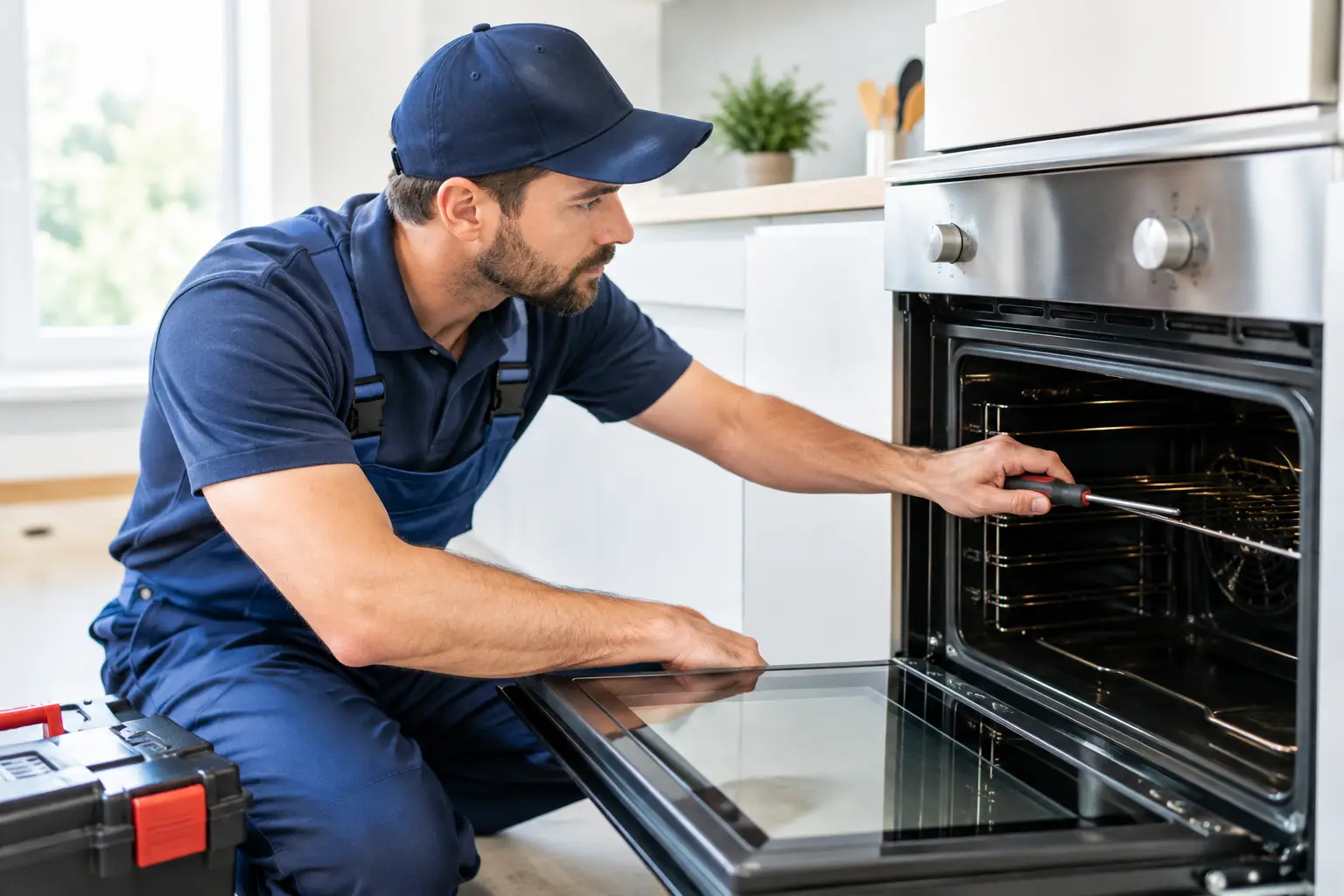
A cold oven at dinnertime is more than an inconvenience. It can disrupt family meals, meal prep, baking plans, and a busy household schedule. The good news is that many oven repair issues can be diagnosed and fixed without replacing the entire appliance. Knowing what to check safely and when to call a technician can help you avoid wasted time, food, and money.
Common Oven Problems That Need Repair
Ovens usually give warning signs before they stop working completely. A longer preheat time, uneven baking, inconsistent temperatures, unusual noises, or an error code can all point to a developing problem. Addressing these signs early may prevent a small part failure from becoming a more involved repair.
The Oven Will Not Heat Up
If an electric oven turns on but does not heat, a failed bake element or broil element is often the cause. These elements create the heat inside the oven cavity. A damaged element may look blistered, cracked, or visibly burnt, but not every failure is easy to see.
A faulty temperature sensor, control board, wiring connection, or thermal fuse can cause the same symptom. Because these components involve live electrical circuits, professional diagnosis is the safer choice. A technician can test the appliance properly and replace only the part that has failed.
For a gas oven that will not heat, the problem may involve the igniter, gas valve, burner assembly, or control system. Do not attempt to disassemble a gas appliance or test gas-related parts yourself. If you smell gas, leave the area, avoid using switches or flames, and contact your gas supplier or emergency services as appropriate.
The Oven Heats, But Food Cooks Unevenly
Cookies that brown on one side, casseroles that remain cold in the middle, or meals that take much longer than the recipe states may indicate an inaccurate oven temperature. In some cases, the temperature sensor is no longer reading correctly. In others, a weak element or failing convection fan is not distributing heat as it should.
A basic oven thermometer can help confirm that the displayed temperature and actual oven temperature are far apart. Keep in mind that ovens cycle on and off during use, so some movement is normal. If the temperature is consistently off by a significant amount, or if it fluctuates widely, service is recommended.
The Oven Door Will Not Close or Lock Properly
A door that does not seal tightly lets heat escape, which can lead to poor cooking results and higher energy use. Worn hinges, a damaged door gasket, or a misaligned latch may be responsible. If the door lock fails during or after a self-clean cycle, do not force it open. The locking system, control board, or latch assembly may need attention.
Self-cleaning cycles create extremely high temperatures and can place extra strain on oven components. If your oven has a history of overheating, electrical faults, or door-lock problems, it is best not to run a self-clean cycle until the appliance has been inspected.
The Control Panel Is Unresponsive
Modern ovens rely on electronic controls for temperature settings, timers, lighting, and cooking modes. A blank display, flashing clock, buttons that do not respond, or recurring error codes can be caused by a failed control board, damaged touchpad, loose connection, or power supply issue.
Before booking service, check whether the circuit breaker has tripped and confirm that the appliance has power. If the breaker trips again after being reset, stop using the oven. Repeated tripping can signal an electrical fault that requires professional repair.
Safe Checks to Make Before Booking Oven Repair
A few simple checks can rule out a minor issue without putting you at risk. For an electric oven, make sure the appliance is receiving power and check the household breaker panel. A range may have enough power for the clock or cooktop while a partially tripped breaker prevents the oven from heating correctly.
Confirm that the timer is not set to delay start and that the oven is not in a special mode that affects operation. If the issue is uneven cooking, remove excessive foil from the oven floor or racks, as it can block airflow and reflect heat in ways the appliance was not designed to handle.
Avoid removing panels, disconnecting wiring, bypassing fuses, or attempting to repair heating elements while the oven is connected to power. For gas ovens, leave ignition, burner, and gas-line work to a qualified technician. A quick inspection is useful. A do-it-yourself repair that damages wiring or creates a gas safety risk is not.
When you contact a repair company, having the model number, a description of the symptom, and any error code available can speed up the process. The model number is commonly found around the oven door frame, inside a drawer, or on the appliance’s side panel.
Is Oven Repair Worth It?
Whether repair is the right choice depends on the appliance’s age, condition, repair cost, and the specific part involved. A failed bake element, igniter, door hinge, temperature sensor, or fan motor can often be repaired at a reasonable cost, particularly when the rest of the oven is in good condition.
Replacement may make more sense when an older appliance has multiple failures, a costly control board issue, severe rust or cabinet damage, or parts that are no longer available. It also depends on your plans for the home. A landlord may need a fast, durable repair to restore a rental unit, while a homeowner planning a kitchen renovation may make a different decision.
An honest diagnosis should give you clear options. You should know what part has failed, what the repair involves, and what the expected cost is before work begins. Transparent pricing helps you decide with confidence rather than feeling pressured into a repair or replacement.
What to Expect From a Professional Oven Repair Visit
A properly equipped technician begins by listening to the symptoms and checking the appliance safely. They may test heating elements, igniters, sensors, fuses, wiring, fan motors, and electronic controls to identify the actual cause. Good diagnosis matters because several different parts can produce similar symptoms.
Many common oven repairs can be completed during the first visit when the required parts are available in the service vehicle. If a special-order part is needed, the technician should explain the next steps, timing, and cost before proceeding. The goal is not simply to get the oven running for a day, but to restore reliable operation.
For households in Kitchener, Waterloo, Cambridge, and nearby communities, prompt in-home service can make a real difference when cooking appliances fail unexpectedly. IAS Repair & Parts provides professional diagnostics, transparent pricing, and warranty-backed parts and labour so customers can make informed decisions about their oven.
How to Help Your Oven Last Longer
Regular care will not prevent every component failure, but it can reduce unnecessary wear. Clean spills once the oven has cooled, especially sugary foods and grease that can burn onto surfaces. Use cookware that allows air to circulate, and avoid lining the oven bottom with foil unless the manufacturer specifically permits it.
Be gentle with the oven door. Leaning on an open door or repeatedly slamming it can damage hinges and affect the seal. If you use the self-clean function, follow the manufacturer’s instructions carefully and remove racks if recommended. For some households, manual cleaning with an oven-safe cleaner is a lower-stress option for an older appliance.
Pay attention when performance changes. An oven that takes ten extra minutes to preheat may still cook dinner tonight, but it may be telling you that an element, igniter, or sensor is beginning to fail. Booking service before a complete breakdown gives you more flexibility and helps keep your kitchen working when you need it most.

No comment