
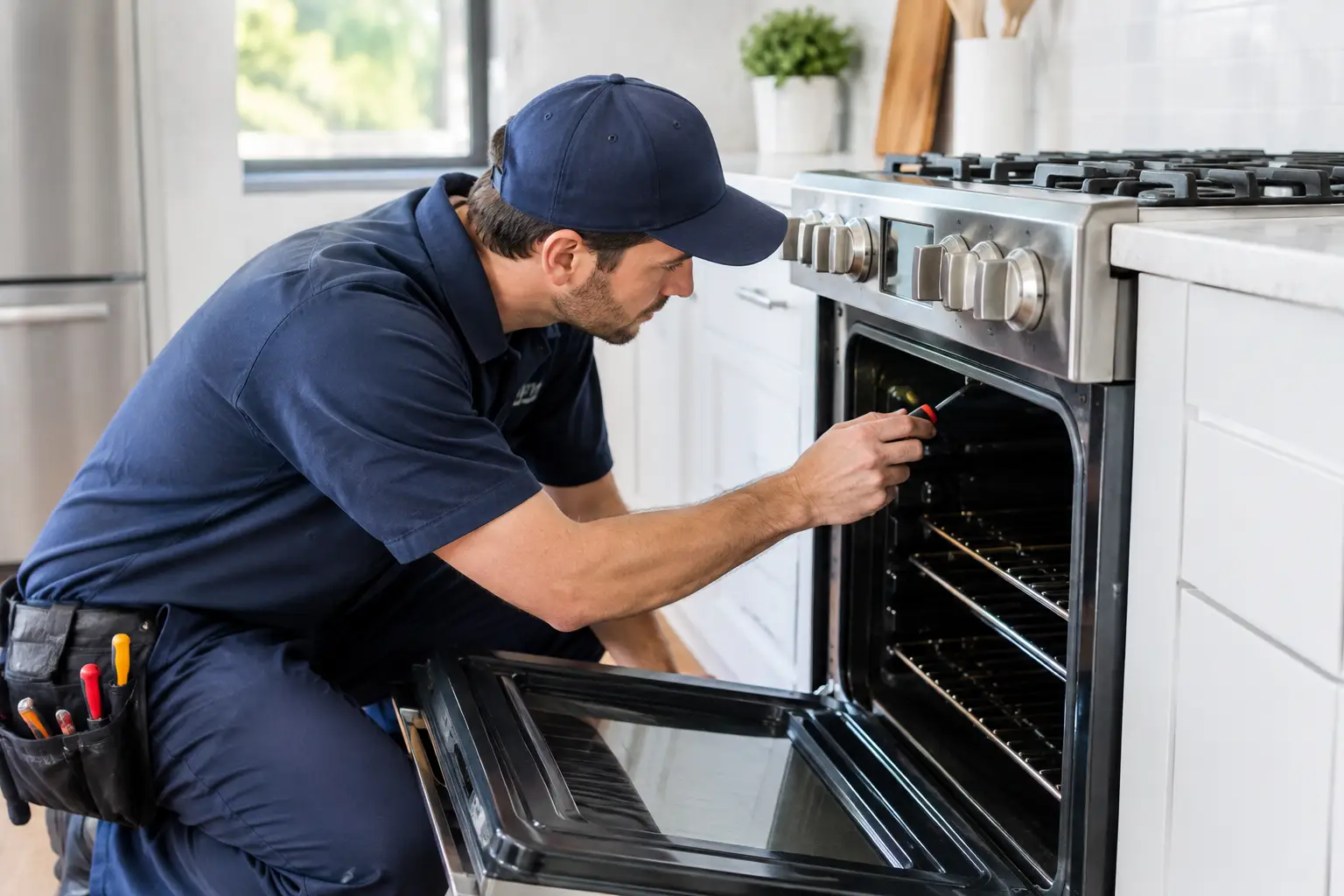
A range that will not heat properly can turn a simple weeknight meal into a costly takeout order. Whether a burner stays cold, the oven cooks unevenly, or you smell gas when you try to start the appliance, prompt range repair can restore your kitchen routine and prevent a small fault from becoming a larger safety concern.
Modern ranges combine high-heat components, controls, wiring and, in many homes, a gas supply. That is why the right response depends on the symptom. Some issues have a simple explanation, while others need a licensed technician with the tools and replacement parts to diagnose the appliance safely.
Signs Your Range Needs Repair
The clearest sign is a burner or oven that does not heat at all. On an electric range, one element may remain cold, heat only at certain settings, or cycle on and off unpredictably. A glass cooktop may show an error code, fail to respond to touch controls, or have a damaged surface. On a gas range, a burner may click continuously, light slowly, produce an uneven flame, or fail to ignite.
Uneven cooking is another common reason to book service. If cookies brown on one side but not the other, or food takes far longer than expected, the oven may have a failing bake element, broil element, igniter, temperature sensor or control issue. The oven can appear to be working while still operating at the wrong temperature.
Pay attention to changes in normal operation. A range that trips the breaker, sparks, displays a control-panel error, makes unusual buzzing sounds, or has knobs that no longer respond should be assessed before you continue using it. These symptoms can point to electrical faults that are not safe to troubleshoot by opening the appliance yourself.
Treat Gas Smells as Urgent
If you smell natural gas or suspect a gas leak, do not light a burner, operate electrical switches, use a phone near the appliance, or attempt a repair. Leave the home if the odour is strong, follow your gas utility’s emergency instructions, and call for qualified help from a safe location.
A brief gas smell when a burner first ignites can occur, but it should disappear quickly. A continuing odour, yellow or orange flames, delayed ignition, or flames coming from areas other than the burner are reasons to stop using the range. Gas appliance service requires the correct testing equipment and qualified handling.
Safe Checks Before Booking Range Repair
A few basic checks can help rule out simple causes and give your technician useful information. Start by confirming the range has power. Check whether the display is on, whether the clock needs resetting after a power outage, and whether the circuit breaker has tripped. If a breaker trips again after being reset once, leave it off and arrange service.
For an electric coil range, allow all surfaces to cool completely, then check whether the element is seated properly in its receptacle. For a gas cooktop, remove cooled burner caps and make sure they are positioned correctly. Spills, food debris and moisture can interfere with ignition or produce an uneven flame. Clean only according to the manufacturer’s care instructions, and never push objects into burner ports or igniter openings.
It also helps to test more than one function. For example, note whether the cooktop works while the oven does not, whether only one burner is affected, and whether the broil function heats differently from bake. Record any error code and the make and model number if available. These details can make the diagnosis more efficient.
Do not remove rear panels, handle wiring, bypass a safety switch, or try to repair a gas line. Online videos often make component replacement look simple, but ranges store electrical energy and involve high temperatures. An incorrect repair can damage the appliance, create a fire risk, or void a warranty.
Common Range Problems and What Causes Them
A single cold electric burner may be caused by a worn surface element, damaged burner receptacle, loose connection or faulty infinite switch. With smooth-top ranges, the problem may involve the radiant element, sensor or electronic control board. The correct part depends on the range model and the results of testing.
When a gas burner clicks but will not light, moisture or residue around the igniter is often part of the problem. If cleaning and drying the cooled burner area does not help, the igniter, spark module, wiring or gas flow may need professional attention. A burner that lights with a match but not with its igniter still needs service rather than ongoing manual lighting.
An oven that will not preheat may have a failed heating element on an electric model or a weak igniter on a gas model. A gas oven igniter can glow yet still be too weak to open the gas valve reliably. This is why a visible glow is not proof that the part is working correctly.
Temperature problems are more nuanced. Before assuming the oven is faulty, check that the rack is positioned properly and that bakeware is not blocking airflow. Heavy pans, dark bakeware and frequent door opening can affect results. But if multiple recipes consistently cook too fast, too slowly or unevenly, a technician can test the sensor, elements, igniter and controls to identify the true cause.
Repair or Replace: How to Make the Right Call
Replacing a range is not always the practical answer. Many common faults involve serviceable components, and a targeted repair can cost significantly less than a new appliance. Repair is often a sensible option when the range is otherwise in good condition, the parts are available, and the expected repair cost is reasonable for its age and quality.
Replacement may make more sense when the appliance has repeated failures, significant corrosion or physical damage, an unavailable control board, or repair costs approaching the value of a comparable new range. Older models can also be less efficient or lack features that matter to your household.
An honest diagnosis should include the cause of the problem, the recommended repair, the cost before work begins and any relevant part availability. You should not have to approve unexpected work without understanding what it solves. For landlords and busy households, this clarity is especially valuable when a working kitchen needs to be restored quickly.
What to Expect From a Professional Service Visit
A prepared technician will inspect the appliance, confirm the symptom and test the relevant components rather than replacing parts based on a guess. For gas appliances, this includes checking safe ignition and operation. For electric ranges, it may involve testing elements, switches, sensors and wiring connections.
Many range repairs can be completed during the first visit when the needed part is stocked in the service vehicle. If a special-order part is required, you should receive a clear explanation of the next step and timing. A professional should also leave the work area tidy and verify that the repaired function operates as expected.
For homeowners and renters in Kitchener, Waterloo and Cambridge, IAS Repair & Parts provides in-home range service with transparent pricing, qualified technicians and warranties on parts and labour. That means you can make a decision based on a clear assessment, not pressure or uncertainty.
Small Habits That Help Your Range Last Longer
Regular cleaning helps prevent many avoidable cooktop and ignition issues. Wipe spills after the surface cools, use cookware with flat bottoms on glass tops, and avoid dragging heavy pans across the surface. On gas ranges, keep burner caps clean, dry and correctly aligned after cleaning.
Use the self-clean cycle carefully and only as directed by the manufacturer. The extreme heat can place stress on oven components, particularly in an older appliance. If your range has already shown temperature errors or control issues, arrange an assessment before running a self-clean cycle.
Your range does a demanding job every day. When it starts showing warning signs, acting early usually means a simpler repair, less interruption at home and a safer kitchen for the people who use it.


No comment