
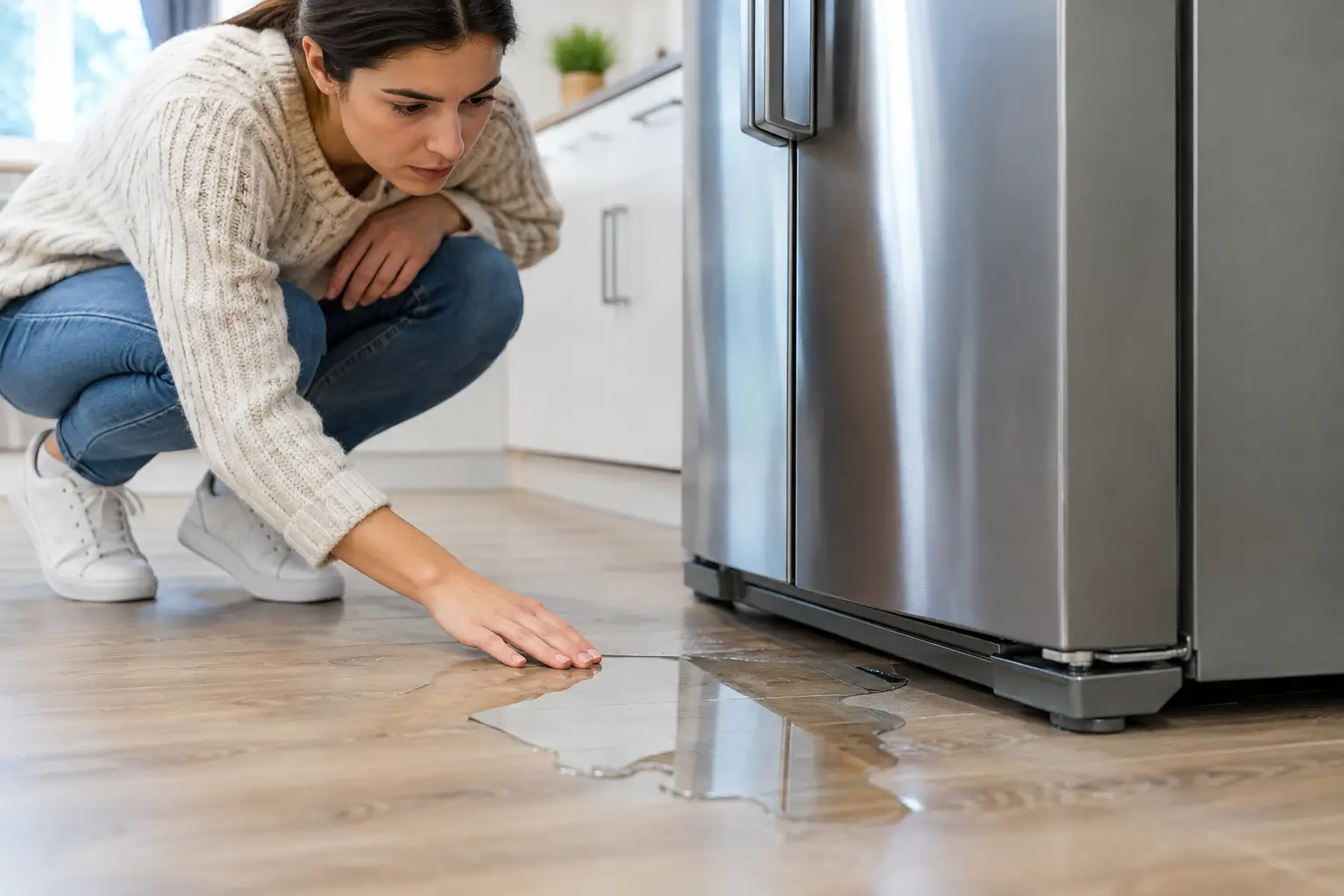
A refrigerator water leak rarely arrives at a convenient time. You may spot a small puddle while making breakfast, then find damp flooring, a swollen baseboard, or water creeping under nearby cabinets. Acting quickly can limit damage, but the source is not always where the water appears. Condensation and leaks can travel along the underside of the fridge before reaching the floor.
Start by moving towels around the appliance and removing any standing water. If water is close to an electrical outlet, power cord, or extension bar, avoid standing in the puddle and switch off power at the breaker if it is safe to do so. Do not pull a heavy refrigerator forward by yourself on a wet floor. Once the immediate area is dry, you can narrow down whether the problem is simple maintenance or a repair that needs professional attention.
Stop the Water and Protect Your Kitchen
Before investigating, protect the floor and the food inside the refrigerator. Keep the doors closed as much as possible so cold air stays in. If you need to turn off or unplug the appliance for more than a short period, move perishable food to a cooler with ice packs or another refrigerator.
Next, check the obvious areas. Look under the front of the refrigerator, behind the unit, and inside the fresh-food compartment. Note whether the water is clear, whether it appears only after someone uses the water dispenser, and whether ice production has changed. Those details help identify the cause and save time during a service call.
Avoid tipping the refrigerator or removing panels that expose electrical components. Modern refrigerators have water lines, fans, wiring, and control boards in tight spaces. A misplaced connection can create a bigger problem than the original leak.
Common Causes of a Refrigerator Water Leak
A blocked defrost drain
A blocked defrost drain is one of the most common reasons for water inside the fridge or a puddle beneath it. During normal defrost cycles, melted frost is directed through a small drain hole and tube to a pan near the compressor, where it evaporates. Food debris, ice, or residue can block that path. The water then backs up and may freeze on the bottom of the freezer or spill into the refrigerator section.
You may notice a sheet of ice under freezer baskets, water under crisper drawers, or recurring puddles even when the water dispenser is not used. Some drain openings are accessible, but clearing a frozen or deeply blocked drain often requires partial disassembly. Forcing tools into the drain can damage the liner or tubing, so this is a sensible point to arrange a diagnosis.
A leaking water supply line or connection
If your refrigerator has an ice maker or water dispenser, it is connected to a household water supply. The line may leak at the shutoff valve, the fitting behind the refrigerator, the filter housing, or a section of tubing that has been pinched as the appliance was pushed back.
Pull the refrigerator forward carefully only if you can do so without straining the line or scratching the floor. Look for drips, mineral buildup, dampness around fittings, or a wet path running from the back of the unit. Do not overtighten plastic connections. A fitting that feels loose may have a worn seal, crossed thread, or damaged tube that needs replacement rather than extra force.
If a steady leak is coming from the supply line, turn off the refrigerator’s water shutoff valve if you can locate it safely. The valve is often under the kitchen sink, in the basement below the kitchen, or behind the refrigerator. This can stop the water while leaving the refrigerator powered on to protect food.
A cracked or overflowing drain pan
The drain pan sits beneath many refrigerators and collects small amounts of defrost water. It normally dries through heat and airflow. A cracked pan, an improperly positioned pan, or a refrigerator that is not level can allow water to escape onto the floor.
This issue can be easy to confuse with a water-line leak because the puddle often appears near the front or middle of the appliance. A technician can inspect the pan, check the refrigerator’s level, and confirm that the defrost system is not producing more water than it should.
A damaged door seal or frequent condensation
Warm, humid kitchen air entering through a worn door gasket can create excess moisture inside the refrigerator. That moisture may collect beneath drawers, drip from shelves, or overwhelm the defrost system over time. Check for cracked, hardened, dirty, or loose sections of the rubber seal.
A quick test is to close the door on a piece of paper. If the paper slides out with very little resistance at several spots, the gasket may not be sealing properly. Cleaning the gasket can help when food residue is the issue. If the seal is torn or deformed, replacement is usually the reliable fix.
A clogged or incorrectly installed water filter
A refrigerator water filter can leak if it is not fully seated, the wrong filter type has been installed, or the filter housing is damaged. Water may appear inside the refrigerator near the filter compartment or run down the back wall after dispensing water.
Remove and reinstall the filter according to the appliance instructions, making sure it locks into place without forcing it. If the housing continues to drip after the filter is correctly installed, stop using the dispenser and arrange repair. The housing or internal water valve may be failing.
Clues That Point to the Source
The timing and location of the water matter. A puddle that appears after filling a glass usually points toward the dispenser, filter, or supply line. Water under the crisper drawers, especially with frost in the freezer, more often suggests a defrost drain problem. Water only at the back of the refrigerator may come from a loose connection, damaged tubing, or drain pan.
A refrigerator that is leaning forward can also cause water to pool where it should not. Most units need a slight backward tilt so doors close properly and defrost water drains as designed. However, levelling feet should be adjusted carefully. If the refrigerator is unstable, rocks on the floor, or has been recently moved, professional adjustment is safer than repeated trial and error.
When a Leak Needs Professional Repair
A small, one-time spill from a poorly seated filter may be resolved at home. A recurring refrigerator water leak is different. Repeated moisture can damage flooring and cabinetry, encourage mould growth, and eventually affect electrical components. It is worth booking service when you see water returning after cleanup, ice building inside the freezer, visible damage to tubing, a leaking filter housing, or poor cooling alongside the leak.
Professional service is particularly useful when the appliance must be pulled out, the defrost system needs access, or the water line requires replacement. A qualified technician can trace the source instead of replacing parts based on guesswork. That matters because a leak near the front may originate from the rear supply line, while a wet freezer floor may be caused by a hidden drain blockage.
For homeowners and landlords in Kitchener, Waterloo, Cambridge, and nearby communities, IAS Repair & Parts can assess the leak in your home, explain the findings clearly, and provide transparent repair options before work begins. Fully equipped service vans can often complete common refrigerator repairs during the first visit, with parts and labour covered by warranty.
Preventing Another Leak
A little routine attention goes a long way. Replace water filters on the schedule recommended for your model, and use the correct filter rather than an almost-compatible alternative. Keep food packages from blocking interior vents or the drain area, wipe door gaskets clean, and avoid forcing the refrigerator too tightly against the wall where it can crush a water line.
After moving the appliance for cleaning or renovations, inspect the water connection before pushing it back. Run the dispenser for a few seconds and look behind the refrigerator for moisture. Catching a loose fitting early is far easier than discovering water damage days later.
If the floor is still getting wet after these checks, do not wait for the puddle to become a renovation project. Dry the area, protect the food, and have the refrigerator assessed before a small leak turns into a larger repair.


No comment