
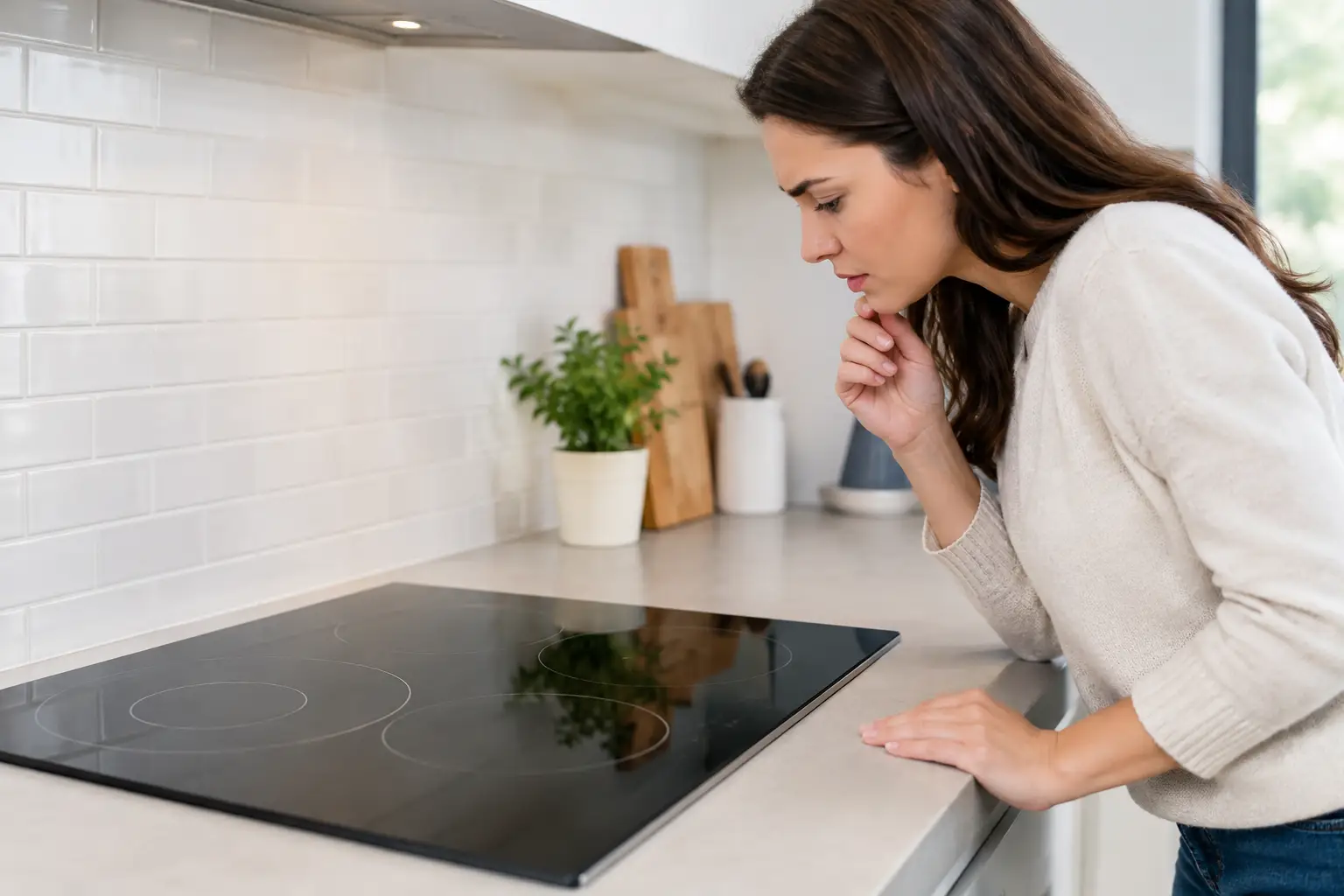
A clicking sound from a gas cooktop is often part of normal operation – but not always. If you are asking what causes cooktop clicking, the answer usually comes down to the ignition system trying to create a spark. A few quick clicks as a burner lights are expected. Clicking that continues after the flame is burning, starts without anyone touching a knob, or happens alongside a gas smell deserves attention.
Most causes are minor, such as moisture after cleaning or food around a burner. Others involve a worn ignition switch, a damaged spark electrode, or an electrical fault. Knowing the difference can help you protect your kitchen, avoid unnecessary disruption, and decide when it is time to arrange professional cooktop repair.
When cooktop clicking is normal
Gas cooktops use an electric ignition system to light each burner. When you turn a control knob to the lighting position, the igniter produces a rapid series of sparks. That creates the familiar clicking sound. Once the gas catches and a steady flame appears, you release the knob or turn it to the desired heat setting, and the clicking should stop.
On many models, operating one burner can make every burner click at once. This is normal too. The cooktop may have a shared spark module, so all electrodes receive power even though only one burner is being used.
A normal ignition sound is brief, occurs only while lighting a burner, and stops when the flame is established. If the burner does not light after a few seconds, turn the knob off rather than letting gas continue to flow. Wait for any unburned gas to clear before trying again.
What causes cooktop clicking after the burner lights?
Continuous clicking after a burner has lit is the issue homeowners notice most often. The cooktop may still be attempting to ignite because it is not receiving the signal it expects from the control or ignition components.
Moisture around the burner or igniter
Water is one of the most common reasons for persistent clicking. It can get beneath the burner cap after wiping the cooktop, boiling over a pot, or using a spray cleaner. Even a small amount of moisture around the ceramic spark electrode can interfere with the ignition system and make it click repeatedly.
Remove the burner grates and caps only after the surface has cooled. Blot up visible moisture with a clean, dry cloth, then allow the components to air-dry thoroughly. Avoid forcing water into the small openings around the igniter. If the clicking began immediately after cleaning, leaving the cooktop off for several hours may solve the problem.
Food residue or a misaligned burner cap
Grease, sauce, crumbs, and cleaning residue can block the gas ports or prevent the burner cap from sitting correctly. When gas does not reach the spark properly, the burner may light slowly, light unevenly, or keep clicking after it catches.
Check that the burner cap is clean, dry, and seated flat in its proper position. A cap that is slightly off-centre can cause an uneven flame and unreliable ignition. Do not use a toothpick, pin, or other object to aggressively clear burner openings, as this can damage the ports or leave debris behind. Gentle cleaning with the manufacturer-approved method is the safer approach.
A damp or failing ignition switch
Each burner knob is connected to an ignition switch. If a switch becomes wet, greasy, worn, or electrically damaged, it can send a false signal to the spark module. That can make the cooktop click even when every knob is in the off position.
This is not a repair to put off indefinitely. A cooktop that activates its igniters by itself can be irritating, but it can also indicate that an electrical component needs attention. If drying the cooktop does not stop the sound, disconnect power at the plug or circuit breaker if it is safe to do so, and arrange service.
A cracked spark electrode or damaged wire
The spark electrode is the small ceramic-and-metal component beside each burner. It creates the spark that lights the gas. Cracks in the ceramic insulation, corrosion on the metal tip, loose wiring, or damage caused by impact can send the spark to the wrong place or prevent it from working consistently.
You may notice clicking, a visible spark away from the burner, delayed ignition, or one burner that will only light with a match or lighter. Avoid relying on manual lighting as a long-term workaround. It does not correct the underlying issue and may not be appropriate for every appliance or household situation.
A faulty spark module
The spark module supplies voltage to the igniters. When it begins to fail, the cooktop may click continuously, click at random, or produce weak and inconsistent sparks. Because the module and its wiring are inside the appliance, diagnosis should be left to a qualified technician.
A technician can determine whether the issue is the module itself, an individual switch, the wiring harness, or another related part. Replacing parts based on guesswork can add cost without resolving the problem.
Clicking with no flame: treat gas safety seriously
Clicking is electrical, but a gas cooktop combines electricity with fuel. If you smell gas, hear hissing, or suspect gas is flowing without ignition, turn all burner controls to off. Do not use matches, lighters, switches, fans, or electrical appliances near the cooktop. Leave the area and contact your gas utility or emergency services from a safe location if the smell is strong or persistent.
Do not continue testing burners until you know the area is safe. A faint odour that disappears quickly after a failed lighting attempt may simply be unburned gas, but recurring odours, delayed ignition, or flames that flare unevenly should be inspected.
Why a cooktop can click when it is turned off
A cooktop clicking on its own is usually linked to moisture, a stuck ignition switch, or a fault in the switch harness or spark module. It can happen after a spill that seems minor, particularly if liquid runs beneath a knob or into a burner assembly.
Start by checking that every knob is fully in the off position. If the sound continues, do not pull wires apart or remove sealed gas components. Disconnect electrical power only if you can do so safely and without moving the appliance. For a hardwired cooktop, use the dedicated breaker rather than attempting to access internal connections.
Once power is off, arrange a diagnosis. The repair may be straightforward, but the correct fix depends on the model and the affected component.
Steps you can safely take before booking service
For a cooktop that clicks but has no gas smell or visible damage, a few basic checks can be useful. Let the surface cool completely, ensure all knobs are off, and remove the grates and burner caps. Dry the area carefully and confirm each cap is properly seated before restoring power and testing one burner.
If the clicking stops, keep an eye on the cooktop during the next few uses. If it returns, especially after no new spill or cleaning, there may be an underlying component issue. Repeatedly unplugging and reconnecting the appliance is not a reliable fix.
Call for professional help when clicking continues after drying, a burner will not ignite, the ignition starts by itself, you see sparking in the wrong location, or you smell gas. These symptoms are less about convenience and more about safe operation.
Get the right repair instead of guessing
Gas cooktops are built from several connected systems, so the same clicking sound can have very different causes. A proper in-home diagnosis identifies whether the issue is residue, moisture, burner alignment, an electrode, a switch, or the spark module before replacement parts are recommended.
For households in Kitchener, Waterloo, Cambridge, and nearby communities, IAS Repair & Parts can assess cooktop ignition problems with transparent pricing and warranty-backed parts and labour. A technician can also check burner operation after the repair, so you are not left wondering whether the clicking will return.
A cooktop should light promptly, burn with a steady flame, and go quiet once ignition is complete. If yours does not, turning it off and getting the cause checked is a practical way to keep dinner plans and kitchen safety on track.

No comment